Hey everyone, thanks for dropping by. I’m Jake, and I’ve been selling net weighing baggers for over 12 years now—most days I’m on the phone with plant managers, line supervisors, or maintenance guys who’re either frustrated with their current bagging setup or just trying to figure out why their new bagger won’t talk to their existing line. The question I get more than any other right now? “What even is the communication interface for a net weighing bagger?” Net Weighing Bagger
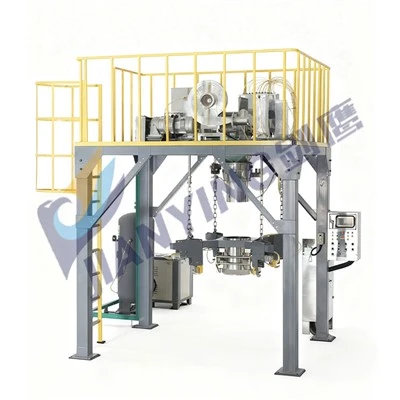
I get it. When you’re deep in packaging equipment, all that tech talk—Modbus, EtherNet/IP, MQTT—can feel like learning a second language. A lot of my customers aren’t automation engineers; they’re guys who show up at 5 a.m. to troubleshoot a jammed bagger and go home at 7 p.m. because production went down. So today, I’m gonna break this down like I’m talking to a buddy of mine who’s got a bagger on his shop floor that’s acting weird. No jargon dumps, no fancy corporate fluff, just the real deal from someone who’s installed, repaired, and sold these things long enough to know what actually matters.
First off, let’s start with the basics: what is a net weighing bagger, anyway? If you’re reading this, you probably know, but just to set the stage—these are the machines that weigh products by net weight, not gross. So if you’re bagging flour, rice, pet food, or even small parts like screws, the machine weighs exactly how much product goes into each bag, not including the bag itself. It’s way more accurate than old-style volumetric baggers, and it cuts down on giveaway (that’s the product that’s over the labeled weight, eating into your profits). My team and I sell these things for all kinds of industries, from small craft bakeries to big national pet food brands, so I’ve seen how different facilities set them up.
Now, the communication interface. Let’s be clear: this isn’t some shiny side panel or a touchscreen (though the touchscreen is part of how you input settings). The interface is basically the bridge between your bagger and every other piece of equipment on your line. Think about your production floor: you’ve got a feeder that brings product to the bagger, a conveyor that takes full bags to a sealer, a scale that checks if a bag is under or over weight, and maybe even a warehouse management system (WMS) that tracks how many bags you’re packing that shift. If your bagger can’t talk to any of these, you’re running into so many problems. Like, if your feeder’s running too fast and overfills the bag, your bagger can’t send a signal to slow it down. Or if your checkweigher catches a bad bag, your bagger doesn’t know to skip that one and not send it to sealer. That’s where the communication interface comes in.
Let’s dive into the main types of interfaces you’ll actually see on a net weighing bagger, not the stuff you read about in a textbook. First, and the most common one I deal with day to day: serial and industrial Ethernet protocols. Wait, I said no jargon—let’s translate that. Serial is the old-school stuff, like Modbus RTU or RS-232. You’ll see this on older baggers, or on smaller, budget-friendly models for small businesses. It works over a single cable, so it’s cheap, easy to connect, but it’s slow. If you’ve got a line that’s packing 60 bags a minute, serial might cut it, but if you’re running 120 bags a minute? You’ll start getting lag, missed signals, and production glitches. I sold a bunch of these serial-based baggers back in the early 2010s, and half the complaints I got later were from guys who upgraded their lines and realized their old bagger couldn’t keep up.
Then there’s the newer stuff: EtherNet/IP and Profinet. These are industrial Ethernet protocols, and they’re basically the backbone of most modern facilities now. If you’ve got a line with a PLC (programmable logic controller—think of that as the brain of your whole packaging line) or a SCADA system (the big screen in the control room that shows you every line’s status), this is what you’ll want. EtherNet/IP is super common in North America, Profinet more in Europe, but a lot of my baggers now support both so we can ship them anywhere. What’s cool about these is they can carry way more data. Not just a “start” or “stop” signal—they can send you real-time weight data, how many bags you’ve packed that hour, if there’s a jam, even how much product’s left in the hopper. Last year I worked with a dog food plant in Ohio that used EtherNet/IP to connect their baggers to their WMS. Now they don’t have to manually count bags at the end of the shift—their system pulls all that data straight from the bagger. Saved them 2 hours a day of manual counting, no joke.
Next up, the human-machine interface (HMI). This is the part you actually touch, the little screen on the bagger. I’ve had customers tell me their HMI is their communication interface, and in a way, they’re right. That screen is how you talk to the bagger, and how the bagger talks to you. On a basic bagger, the HMI might just have buttons to start/stop, set the bag size, or adjust the weight target. On a newer model, it’s a full color touchscreen that shows you graphs of your fill weights, error codes (like “bag jammed” or “feeder blocked”), and lets you pull reports. The best part? My team programs these HMIs to work with whatever system you already have. If you hate new software, we can make the HMI look like your old one, so you don’t have to retrain your whole crew. That’s a big one—no one has time to learn a whole new interface when they’re already swamped.
Wait, there’s another one I’ve been seeing a lot more of lately, especially with bigger operations: MQTT and IoT-based interfaces. This is for facilities that want to connect their baggers to the cloud. Yeah, I know, “cloud” sounds like some tech buzzword, but hear me out. If you’ve got multiple baggers in different locations—like, say, a plant in Chicago, another in Dallas—you can pull data from all of them to one central dashboard. You can check how each bagger is running, if they need maintenance, even adjust settings remotely. Last year we installed a line of baggers for a rice company that has 8 plants across the US. Their maintenance team doesn’t have to fly to each plant to check if a bagger is acting up—they can log into their dashboard, see that a bagger in Georgia has 3 jams in an hour, and troubleshoot it over the phone with the local crew. That’s cut their maintenance costs by almost 30% in a year. Is MQTT for everyone? Probably not. If you’ve got a small shop with one bagger, you don’t need to pay for cloud access. But if you’re a bigger operation, it’s a game changer.
Now, let’s talk about what actually matters when you’re choosing a communication interface for your net weighing bagger. Because I’ve had customers come to me asking for a specific protocol that their old bagger had, but it doesn’t fit their new line. Here’s the real tea, no sales pitch: first, check what other equipment you already have on your line. If you’ve got an old PLC from the 2000s that only uses Modbus RTU, you don’t need to splurge on an EtherNet/IP bagger—we can give you a bagger that works with your current PLC, no rewiring needed. That saves you money. Second, think about what you want to get out of the interface. Do you just need the bagger to talk to your sealer so it only sends full bags? Or do you want full data tracking for your WMS? That’ll tell you if you need a basic serial interface or the full EtherNet/IP setup. Third, leave room to grow. I see so many guys buy a cheap bagger with a basic interface, then a year later they add a checkweigher or a WMS and realize they have to replace the whole bagger. It’s way cheaper to get a bagger with a flexible interface that can be upgraded later. A lot of my baggers now have what we call “dual protocol support”—they work with both old serial and new Ethernet, so you don’t have to rewire everything when you upgrade.
Wait, let’s bust a myth here. A lot of people think the communication interface is just for connecting to other machines, but it’s also for troubleshooting. When your bagger goes down, the error code it shows on the HMI isn’t just a random number—it’s the interface sending you a message that something’s wrong. If you didn’t have a good interface, you’d have to guess what’s wrong, take the whole line apart, and waste hours. With a good interface, you pull up the error code, Google it (or call me), and know exactly if it’s a jammed sensor, a feeder issue, or a weight calibration problem. That’s the difference between a 10-minute fix and a 2-hour line shutdown. I remember a customer in Indiana last year who had a bagger go down at 1 a.m. during a big order. He checked the HMI, got an error code that said “load cell communication lost,” knew it was a loose wire, and fixed it in 15 minutes. If he had an old bagger with no good interface, he would’ve called a technician, waited 2 hours, and missed his delivery deadline. That’s the value right there.
Now, what about common mistakes I see customers make? Let’s list ‘em, so you don’t do ‘em. First, buying a bagger with an interface that only works with one brand. I once sold a bagger to a small feed mill that only worked with a specific brand of PLC. When they decided to upgrade their PLC 3 years later, they had to replace the whole bagger because the interface wouldn’t work with the new PLC. Total waste of money. Always go for a universal interface, something that works with all the big brands—Allen-Bradley, Siemens, Mitsubishi, whatever you already have. Second, skipping the HMI and going for the cheapest model. I get it, you want to save money, but a $500 cheaper bagger with a tiny, hard-to-read HMI that doesn’t show error codes or weight data is going to cost you way more in downtime later. Third, not testing the interface before you buy. A lot of suppliers will tell you their bagger works with Modbus, but they don’t actually test it with your specific line. We always test every bagger we sell with the customer’s existing equipment before we ship it, and we do a full on-site setup so we know the interface is working right. That’s why my customers come back—we don’t just sell a machine, we make sure it talks to their line.
Wait, let’s get back to the original question, just to wrap it up clearly. The communication interface of a net weighing bagger is simply the system that lets your bagger talk to everything else. It’s not one single thing—it’s the cables, the protocols, the HMI screen, the software that all works together to connect your bagger to your line, your control room, your warehouse, even the cloud. Without it, your bagger is just a standalone machine that you have to manually start, calibrate, and count bags from. With a good interface, it’s a part of your whole operation that makes your line faster, more accurate, and easier to manage.
I know this got a little long, but I’ve seen too many guys get burned by not understanding their bagger’s interface. If you’re in the market for a net weighing bagger, or you’re looking to upgrade your current one, feel free to hit me up. I don’t do pushy sales calls, I just ask you a few questions about your line, what you’re packing, how many bags you need per minute, and I’ll tell you exactly what interface you need, no fluff, no hidden costs. Just real advice from someone who’s been doing this for way too long.
Before I go, let’s do a quick recap so you don’t forget. The main interfaces you’ll see: old-school serial (good for small lines, slow), industrial Ethernet (EtherNet/IP, Profinet—best for modern lines that need lots of data), HMI (the touchscreen you use to control and troubleshoot), and cloud-based MQTT (for multi-site operations). Always make sure your interface works with your existing equipment, leaves room to grow, and is easy to troubleshoot. That’s it.
Now, if you’re ready to chat about your needs, just reach out. No gimmicks, no generic pitches, just straight talk about baggers and their interfaces. Let’s get your line running smoothly.
Net Weighing Bagger References
- Integrated Packaging Equipment. (2022). Industrial Communication Protocols for Packaging Machinery.
- Packaging World. (2023). Net Weighing Bagger Interfaces: Bridging Production and Digital Systems.
- Association for Packaging and Processing Technologies (PMMI). (2021). Industrial Networking Guidelines for Food and Beverage Packaging Lines.
- Control Engineering. (2022). MQTT and IoT in Packaging Operations: Practical Applications and Benefits.
- Food Engineering. (2023). Reducing Downtime Through Better Machine-to-Machine Communication in Packaging.
Wuxi Jianying Intelligent Equipment Co., Ltd.
We are one of the most professional net weighing bagger manufacturers and suppliers in China, featured by quality products and good price. Please rest assured to buy durable net weighing bagger for sale here from our factory. Welcome to contact us for custom service and OEM service.
Address: No.88, Xinyang Road, Ehu Town, Xishan District, Wuxi City, Jiangsu Province, P.R.China
E-mail: wuxijianying@163.com
WebSite: https://www.wuxijianying.com/
