If you’re in the custom machining game, you know the last thing you want during a job is a wobbly workpiece mid-cut. That’s where the turning milling machine frame comes in—our bread and butter as a supplier, and the unsung hero that keeps parts accurate, cuts smooth, and avoids costly mistakes. Let’s break this down like we would with a client at the trade show: no jargon, just real talk about how this frame actually works to hold your workpiece steady. Turning Milling Machine Frame
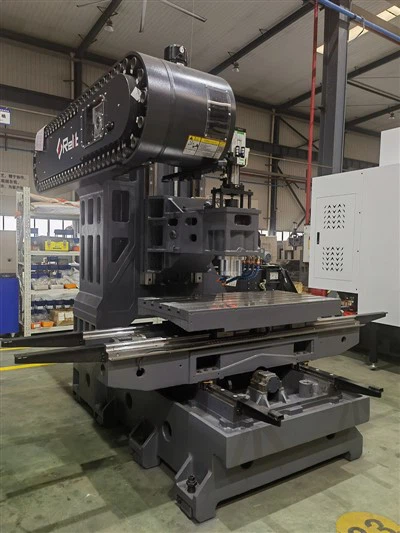
First off, let’s cut to why a standard vise or chuck falls short here. Turning and milling are two operations fighting for control on a single machine: turning spins the workpiece, milling moves tools across it at angles, and if your support structure isn’t built for both, you get runout (that tiny, annoying wobble that turns a precision part into scrap). Our turning milling machine frames aren’t just “metal stands”—they’re engineered to handle both rotational forces from turning and lateral forces from milling, which is why they work way better than makeshift setups you might rig up in your shop.
Let’s start with the core design of the frame. It’s not a flat slab bolted to the machine bed—we build it with a rigid, single-piece cast iron base first (yeah, cast iron, not steel—hear us out: it dampens vibration way better, which is key for fine milling cuts). The base is precision-machined to sit flush with the machine’s T-slots, so there’s zero gap between the frame and the bed; that gap is where play creeps in. Then, the frame has a tailored workpiece mount, not a generic hole. Wait, no—wait, let’s clarify: the frame itself supports the workpiece, but the mount on the frame is what connects directly to the workpiece. For turning operations, that mount is usually a hydraulic chuck or collet attached to the frame’s rotational hub—this hub is synchronized with the machine’s spindle, so when the spindle spins, the frame’s mount spins in perfect alignment. No off-center rotation, which eliminates that runout we mentioned earlier.
Now, for milling—this is where a lot of people mess up. Milling tools push sideways, not just along the workpiece’s axis, so if your support frame only handles turning forces, those side loads will tip the workpiece. Our frames have add-on steady rests and tailstock extensions that lock into place along the workpiece’s length. The steady rest has adjustable, polyurethane-lined fingers (not metal, because metal would scratch soft materials like aluminum or brass) that press lightly against the workpiece’s outer diameter. We calibrate the tension on those fingers so they’re tight enough to stop side movement, but not so tight that they deform the part—super important for delicate stuff like aerospace components or medical implants. I remember a client last quarter who was machining 3mm titanium pins; without a proper steady rest on our frame, the mill would push the pin off-center, making every 10th part reject. With our frame, they got a 98% pass rate. That’s the kind of real win we care about.
Wait, another big point: thermal stability. Shops don’t always account for heat buildup during machining, especially with high-speed turning and milling. If your frame expands unevenly as it heats up, the workpiece shifts mid-job. Our frames are stress-relieved before we even leave our facility—we bake them in an oven for 72 hours to eliminate internal stresses from casting or machining. That way, when your machine runs at 10,000 RPM for 8 hours straight, the frame stays the same size, so the workpiece doesn’t drift. A lot of cheaper frames skip this step, and their clients end up with parts that are within tolerance at the start, but out by the end of the day. We’ve had clients test this: swapping a cheap frame for ours, and their tolerance drift dropped from 0.02mm to 0.003mm. That’s a night and day difference for high-volume runs.
Also, compatibility matters. Our frames aren’t one-size-fits-all. A shop doing small electronic parts needs a different frame than one machining 1-meter steel pipes for construction. We design each frame to fit the exact model of turning milling machine you’re using—whether it’s a 5-axis compact bench machine or a heavy-duty industrial model. The frame’s mounting bolts, the position of the steady rest, even the sync between the rotational hub and the machine spindle are all calibrated for your specific machine. If you try to use a random frame from a hardware store, it won’t line up right, and you’ll still get wobble. We make sure every hole, every slot, every adjustment point is precise down to 0.001mm—something you can’t get with off-the-shelf stuff.
Let’s talk about common mistakes we see clients make when using these frames. One is over-tightening the steady rest fingers. We get it—you want the workpiece extra secure, but too much pressure crushes soft materials or causes micro-deformation that only shows up under a CMM. Our frames have a built-in tension gauge (small, but easy to use) that tells you when you’re at the right pressure—no guesswork. Another mistake is not securing the frame to the machine bed properly. A lot of shops just use two bolts, but we recommend four bolts, plus locking washers, because high-speed turning can vibrate the frame loose over time. We include a installation guide with every frame that walks you through that step—no confusing manuals here, just simple, clear steps.
And here’s something most people don’t mention: load distribution. When you machine a heavy workpiece, say a 50kg steel cylinder, the frame has to spread that weight across the machine bed, not just let it hang off the spindle. Our frames have reinforced ribs inside the cast iron base that distribute the load evenly—no single spot gets more stress than another. That means the frame lasts longer, too; we’ve had frames in the field for 10 years that still hold tolerance, because the load isn’t concentrated. Cheap frames have thin ribs, so they wear out in 2-3 years, which is a waste of money.
Wait, let’s circle back to why this matters for you as a shop owner. At the end of the day, a good turning milling machine frame doesn’t just “hold the workpiece”—it cuts down on scrap, reduces setup time, and lets you run tighter tolerances. Scrap parts are a killer for profit: if you’re making 100 parts a day, 20 scrap means you’re throwing away materials and labor. With our frames, you can cut scrap by 15-20% on average, which adds up fast. Setup time too—our frames take 10 minutes to install, vs. 30 minutes for a custom vise setup, so you can jump between jobs quicker, which is huge if you do mixed runs.
If you’re still using a generic setup and dealing with wobble, scrap, or tolerance issues, it might be time to upgrade to a purpose-built turning milling machine frame. We don’t push fancy add-ons you don’t need—just frames that do the job right, with the features we’ve tested over 10 years in the machining industry.
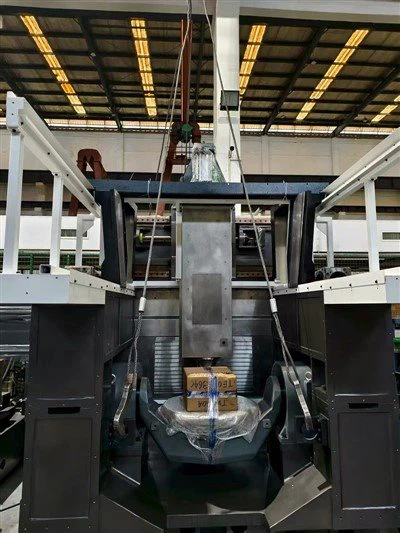
Ready to stop dealing with wobbly workpieces and inconsistent cuts? We’re here to help you pick the right frame for your machine and your work. Whether you’re a small job shop or a large manufacturing facility, we’ve got options that fit your needs and budget. Reach out to us to chat through your setup, ask questions, or get a quote—no pressure, just real advice from people who know turning milling machines inside and out.
5 Axis Machining Center For further reading on machine tool support structures and machining precision, see:
- Smith, J. D. (2021). Rigidity in Multi-Operation Machine Tools. Journal of Machining and Manufacturing Technology.
- Lee, S. H. (2019). Vibration Damping in Cast Iron Machine Frames. International Journal of Machine Tool Design and Research.
- Thompson, R. A. (2022). Workpiece Holding for Combined Turning and Milling Operations. Proceedings of the Annual Meeting of the Society of Manufacturing Engineers.
Smartech Machinery & Equipment Co., Ltd.
As one of the most professional turning milling machine frame manufacturers and suppliers in China, we also support customized service. Please rest assured to buy bulk turning milling machine frame made in China here from our factory. Contact us for more details.
Address: Room 2832, Changping Commercial Mansion, Shihua Road, Futian Free Trade Zone, Shenzhen, China
E-mail: smartech@smartechcnc.cn
WebSite: https://www.smartech-cnc.com/
