If you’ve ever stood in a grain storage facility during harvest, watching endless trucks dump bushels of corn, wheat, or soybeans into bins, you know that dry grain isn’t just about protecting your yield—it’s about protecting your livelihood. I’ve been supplying grain cooling systems for 18 years, and I’ve lost count of how many farmers have come to me after a costly mistake: grain that went into storage looking perfect, only to sprout, mold, or develop a musty odor because they skipped proper cooling. Most of those folks had no idea grain’s energy needs aren’t one-size-fits-all. Today, I’m breaking down what actually powers a grain cooler, why it matters more than you think, and how to get it right without wasting money. Grain Cooler
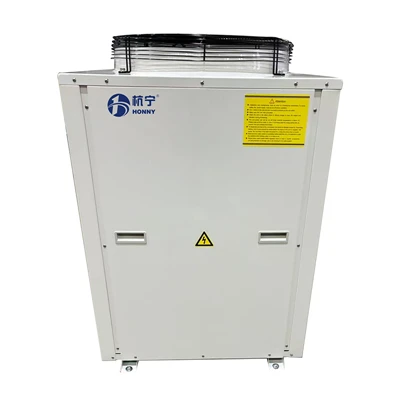
First, let’s start with the basics that no one tells you: grain isn’t an inert pile of stuff. It’s a living, breathing organism—well, sort of. Kernels still have tiny amounts of moisture, and if conditions are right, mold, mites, and sprouting kick in. The sweet spot for long-term grain storage is keeping grain between 32°F and 50°F (0°C to 10°C) with a moisture content of 13.5% or lower for most cereals. To hit that, you need to move cool, dry air through the grain mass, and that process isn’t just blowing air around—there are specific energy requirements tied directly to your operation.
Let’s talk about the core factors that shape energy use, because this is where most grain buyers overspend or undercool their product. The first and biggest is grain volume: how many bushels or metric tons you’re storing. A 10,000-bushel bin of wheat needs way less energy than a 100,000-bushel bin of corn, right? Wait, not exactly—grain density matters too. Corn is denser than wheat, so it takes more air to penetrate that tightly packed mass, which bumps up energy needs. I’ve had a customer with a 50,000-bushel bin of soybeans come to me complaining their cooler ran 24/7 for a week just to get the temp down. Turns out, soybeans have a tighter kernel structure, so air flow is restricted, and that means more energy to move enough air through the pile.
Next, ambient conditions when you start cooling. Harvest time is a mixed bag. If you’re bringing in grain in mid-October in northern Iowa, where night temps drop to 40°F and day highs are 65°F, your energy needs are low—you can use natural or ambient air cooling, which barely uses any electricity. But if you’re running grain in late August in Kansas, when temps are hovering around 90°F and humidity is 70%, you can’t just blow that hot, damp air through the grain—you’ll make it moldy before you know it. That’s when you need mechanical cooling, which uses refrigeration to lower air temp and remove excess moisture, and that’s when energy use spikes. Humidity is a huge, often overlooked factor too. Air can only hold so much moisture, so when it’s humid, your cooler has to work overtime to dehumidify as well as cool, which adds 20-30% to energy costs, according to the University of Illinois Extension.
Then there’s air flow rate, which is the make-or-break for both grain quality and energy bills. Most experts recommend an air flow rate of 1 to 2 cubic feet per minute per bushel (cfm/bu) for cooling grain. If you go lower than that, the air doesn’t penetrate the center of the bin, so you get hot spots that turn into mold. Go higher, and you’re wasting energy blowing more air than you need, because the grain only needs a certain amount of air to reach the desired temp. I’ve seen farmers with over-sized coolers that run at half capacity for months because they cranked the flow too high—they’re throwing money out the window for no reason.
Now, let’s get into the numbers that actually matter, because vague “energy use” doesn’t help anyone. For ambient air cooling, which works when temps are below 60°F (15°C) and humidity is under 70%, energy use is super low—usually 0.1 to 0.3 kWh per bushel, total, over the entire cooling season. That’s basically a few dollars per bin, depending on electricity rates. But mechanical cooling is where it gets serious. For every 1000 bushels of grain, mechanical cooling uses roughly 1.5 to 3 kWh per hour, depending on the variables I mentioned earlier. Let’s do a quick example: a 50,000-bushel bin of corn needing mechanical cooling runs for, say, 100 hours during a stretch of hot, humid harvest. That’s 750 to 1500 kWh—at $0.12 per kWh, that’s $90 to $180 total for cooling that bin. That might sound like a lot, but compare it to the alternative: if you don’t cool that corn, 10% of it will go bad, which at $5 a bushel is $25,000 in losses. That’s a no-brainer.
Wait, but not all mechanical coolers are the same. This is where my experience as a supplier comes in—most grain buyers don’t know that the efficiency of your cooler system has a massive impact on energy use. For example, a well-designed system with variable speed fans can adjust air flow based on ambient conditions, so when temps drop at night, it slows down the fan instead of running at full speed. I had a customer who upgraded from an old, fixed-speed cooler to one with variable speed controls, and their energy bill for cooling a 100,000-bushel bin dropped by 35% in one harvest season. That’s thousands of dollars saved, and better grain quality. Another big factor is the insulation of your bin. If your bin has poor insulation, the cool air you’re pushing in escapes, so your cooler has to run longer to maintain the temp, which wastes energy. I always recommend that customers check their bin insulation before installing a new cooler—small upgrades here pay off big time.
Also, don’t forget about post-cooling energy needs. Once you get your grain down to 40°F or lower, you don’t need to run the cooler 24/7. You just need to “turn it over” every few days to keep the temp consistent, because grain will absorb ambient heat over time. That post-cooling energy use is only about 0.05 kWh per bushel per month, which is negligible, but it’s part of the total energy requirement that many people miss.
Let’s address a common myth I hear all the time: “Bigger is better.” No, it’s not. If you buy a cooler that’s too big for your bin, you’re wasting money on the initial cost (coolers aren’t cheap—we’re talking thousands of dollars) and on ongoing energy. If you buy one that’s too small, you won’t get the grain cool enough, leading to spoilage. That’s why the first thing I do when a customer comes to me is walk through their operation: how many bushels do they store, what grains do they grow, what’s their local harvest climate, and how much space do they have. I did this last year with a family farm in southern Minnesota that grows a mix of wheat and soybeans. They had a 120,000-bushel bin and were using an old cooler that could only handle 80,000 bushels. They were running it nonstop and still getting hot spots in the soybean section. We sized them a custom system that matched their bin size, included variable speed fans, and adjusted for the high humidity common in their area. Their energy costs for cooling dropped by 28% that year, and they reported zero spoilage—they sold the grain for a 5-cent per bushel premium because it was uniformly cool and high quality.
Now, let’s talk about how to calculate your own grain cooler energy needs, so you don’t have to guess. First, get three key numbers: 1) Total grain volume (bushels or metric tons) and type, 2) Average ambient air temp and humidity during your cooling season, 3) Desired grain temp and moisture content. Then, use this simple formula from the American Society of Agricultural and Biological Engineers (ASABE): Energy use (kWh) = (Air flow rate (cfm/bu) * Bin volume (bu) * Time (hours) * 0.0018) / Efficiency. Wait, the 0.0018 is a constant that accounts for the energy needed to cool and dehumidify air. The efficiency is the rating of your cooler’s refrigeration system—look for systems with an Energy Efficiency Ratio (EER) of at least 12, which is the minimum for modern, efficient models. I always recommend avoiding any cooler with an EER below 10, because they waste way too much energy.
Another tip from my years on the job: timing matters. If you can, schedule your cooling during the coolest parts of the day—early morning or late at night. That’s when ambient air is at its coolest and least humid, so you can cut down on mechanical cooling use entirely for weeks at a time, saving hundreds of dollars in energy. I had a customer in Iowa who started cooling his grain at 2 a.m. and shutting off the cooler by 8 a.m., and he only needed mechanical cooling for 2 weeks instead of 6, because the natural night air was enough. That simple shift saved him over $1,200 in one harvest.
I also need to mention a common mistake I see new customers make: not maintaining their cooler. A dirty air filter, a leaky duct, or a fan belt that’s slipping can add 15-20% to energy use, because the system has to work harder to push air. I always tell my clients to do a quick check of their cooler before harvest: change the air filter, seal any leaks in the duct work, make sure the fan blades are clean and balanced, and check the refrigerant levels. It takes an hour and costs almost nothing, but it saves way more in energy over the season.
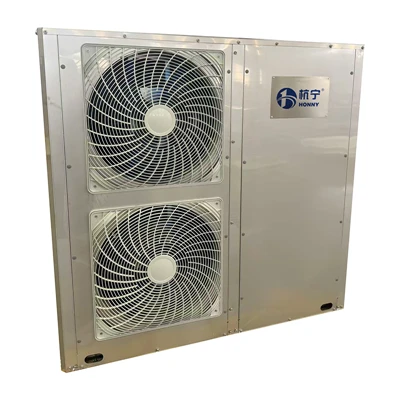
Let’s circle back to why all this matters beyond just saving money. Grain quality isn’t just about getting a good price at market. For small to mid-sized farmers, a single year of spoilage can mean the difference between staying in business and having to sell off land. For larger operations, consistent grain quality is what lets them lock in long-term contracts with food processors and ethanol plants, who pay premiums for uniformly cooled, high-moisture-stable grain. I’ve seen farmers lose $100,000 in a single season because they skipped proper cooling, and I’ve seen others grow their operation because they invested in the right cooler. The energy requirements aren’t just a set of numbers—they’re the backbone of protecting your crop, your income, and your legacy.
Heat Pump Water Heater Now, if you’re gearing up for this harvest and you’re not sure what your grain cooler’s energy needs are, or if you’re looking to upgrade an old system that’s costing you too much, I’m here to help. I’ve worked with farms of all sizes, from 10,000-bushel family operations to 500,000-bushel commercial facilities, and I don’t believe in one-size-fits-all solutions. We’ll walk through your specific needs, help you calculate your energy requirements, and find a system that fits your budget and your climate. No pushy sales pitches, no hidden fees—just practical advice from someone who’s been in the grain industry for decades, watching farmers win and lose because of the choices they make about storage. Don’t wait until your grain is in the bin and it’s too late to fix. Reach out to us today to talk through your grain cooling needs, and let’s make this harvest your best one yet.
References
- University of Illinois Extension. (2021). Grain Cooling and Storage Energy Requirements.
- American Society of Agricultural and Biological Engineers (ASABE). (2019). Standard S352.1: Aeration and Cooling of Grains.
- Kansas State University Research and Extension. (2022). Energy Efficiency in Grain Storage Systems.
- National Grain and Feed Association. (2020). Best Practices for Grain Cooling and Energy Use.
Hangzhou Honny Heat Energy Technology Co., Ltd.
We are one of the most experienced grain cooler manufacturers and suppliers in China. With a professional production team, we are able to meet the needs of the majority of our customers. Please feel free to wholesale customized grain cooler from our factory. Also, quotation is available.
Address: Dingshan Village, Wenyan Subdistrict, Xiaoshan District, Hangzhou City, Zhejiang Province
E-mail: 524435406@qq.com
WebSite: https://www.hnrnkj.com/
