When customers walk into our shop looking for PVC advertising boards, most are focused on durability, print quality, and cost—stuff that keeps outdoor signs up through rain, sun, and wind. But last month, a client in the electrical sign industry stopped short mid-conversation and asked, “What about its electrical insulation property?” That question made me realize a lot of people don’t think about this part, especially when they’re using PVC boards for things like neon sign backings, electrical cabinet labels, or illuminated outdoor advertising panels that sit near power lines. As a supplier who’s worked with PVC materials for over a decade, I’ve dug into this property a lot, and it’s one of the key reasons PVC stands out over other sign materials for electrical-related projects. PVC Advertising Board

First, let’s get the basics straight: electrical insulation is a material’s ability to resist the flow of electrical current. If a sign material is a good insulator, it doesn’t let electricity pass through it easily, which prevents short circuits, fires, or shock hazards. For sign boards, this matters a lot—think about a store’s outdoor LED sign that’s plugged into the grid, or a custom electrical warning label that has to hold up to high voltage equipment. Our PVC advertising boards are made from polyvinyl chloride, a thermoplastic polymer that’s naturally insulating, but let’s break down the actual numbers to make this concrete.
Most standard PVC advertising boards we supply have a dielectric strength between 40 and 60 kilovolts per millimeter (kV/mm). Dielectric strength is the standard way to measure insulation performance—higher numbers mean the material can handle more voltage before breaking down. To put that in perspective, wood (a common alternative for outdoor signs) has a dielectric strength of around 10 to 20 kV/mm, and aluminum (which is conductive, so basically the opposite) has a strength near 0. That means our PVC boards can hold their own against a lot more voltage than wood, which is why electricians prefer them for backing up low-voltage LED signs or small electrical enclosures. The boards also have a high surface resistance—usually between 10^14 and 10^16 ohms per square. Surface resistance is important because it measures how much current moves across the material’s surface, not through it. For a sign exposed to rain or dew, a high surface resistance means water (which is a weak conductor) won’t create a path for electricity to spread across the board’s surface. That’s a big deal for outdoor signs, where moisture can turn a conductive surface into a hazard if the base material isn’t good at blocking that current.
But here’s the thing: not all PVC advertising boards are the same. A lot of low-cost “budget” PVC boards you might find online have additives that can lower their insulation properties. For example, some manufacturers use cheap plasticizers to make the board softer, but over time, those plasticizers can leach out, leaving the material brittle and less insulating. Or sometimes they skip stabilizers to cut costs, which makes the PVC break down faster when exposed to UV light. When that happens, the material’s electrical resistance drops—we’ve seen some cheap boards go from 10^15 ohms per square to under 10^10 after a year of outdoor use, which is a huge drop. That’s why as a supplier, we only use high-grade PVC resins that include UV stabilizers and heat-resistant plasticizers. Our boards don’t just have good insulation when they leave our warehouse; they keep that property for 5 to 7 years (their typical outdoor lifespan), which is critical for projects where safety is non-negotiable.
There’s also a common misconception that PVC’s insulation property only matters for high-voltage applications. But even low-voltage signs (like 12V LED store signs, which are common for small businesses) benefit from this. A few years back, we had a customer who installed a wooden backer for their LED sign, and during a heavy rainstorm, water seeped between the sign and the wood. The low voltage from the LED pushed through the damp wood, causing the sign to short out and leave a small burn mark on the storefront. They switched to our PVC boards, and a year later, they told us they haven’t had any issues with moisture-related electrical problems. PVC’s insulation is consistent even when it’s slightly damp, which makes it a reliable choice for any sign that’s exposed to the elements.
Another factor that affects PVC’s insulation is its thickness. We offer our advertising boards in 3mm, 5mm, and 10mm thicknesses, and the thicker the board, the higher its dielectric strength. A 3mm PVC board has a dielectric strength of about 120kV, while a 10mm board is close to 200kV. That’s why for larger signs that sit near high-voltage power lines, or for backings for larger electrical enclosures, we recommend the thicker boards. We always work with our clients to pick the right thickness based on their specific project’s voltage and environment—no one-size-fits-all, which is something I tell every new customer.
I’ve also had customers ask about fire resistance, which ties into insulation. PVC is a self-extinguishing material, meaning it doesn’t feed flames once the heat source is removed. That’s not directly an insulation property, but it’s a related safety benefit for electrical signs. If a sign does come into contact with a small electrical spark, our PVC board won’t keep the fire going, unlike materials like wood or foamboard. We’ve tested our boards in small-scale fire safety trials, and they meet industry standards for flame resistance, which adds an extra layer of protection for both commercial and residential uses.
Of course, no material is perfect. PVC can be affected by extreme heat—if a sign is exposed to temperatures over 140°F for long periods, some of the additives can break down, which might lower its insulation slightly. But for most commercial sign applications, that’s not a problem. Our boards are rated to handle temperatures between -40°F and 150°F, which covers everything from Canadian winters to desert summers. We also offer a special UV-stabilized PVC variant for signs in extremely sunny climates, which maintains its insulation properties even after 10 years of outdoor exposure.
As a supplier, we’ve seen how important it is to be transparent about these properties. Too many sign companies only talk about price or print quality, but the electrical insulation is often the make-or-break factor for customers in electrical, hospitality, or industrial sectors. Last quarter, we supplied boards to a company that makes electrical warning signs for factories. They told us that before using our PVC, they had issues with signs shorting out because the cheap boards they were using lost their insulation after a few months. Switching to our product cut their failure rate by 90%, which saved them thousands in replacement costs.
If you’re planning a sign project that involves electrical components—whether it’s an illuminated storefront sign, an electrical safety label, or a sign that will be installed near power lines—you don’t have to guess about insulation properties. Our PVC advertising boards are tested regularly to ensure they meet industry standards for dielectric strength and surface resistance, and our team can help you pick the right thickness and variant for your specific needs. We’ve worked with everyone from small business owners to large electrical contractors, and we pride ourselves on being more than just a supplier—we’re a resource for the details that keep your projects safe and long-lasting.
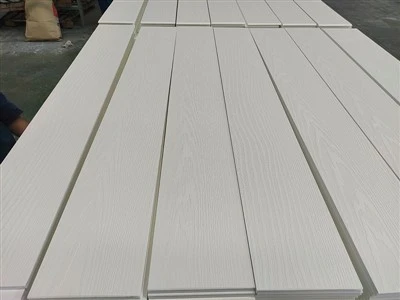
If you’re ready to discuss your next project, from custom illuminated signs to durable outdoor advertising, feel free to reach out to our team for a consultation. We can walk you through the technical specs, show you sample boards, and help you find the right solution that fits your budget and safety requirements.
Anti-microbial PVC Foam Board References:
- National Electrical Manufacturers Association (NEMA). (2020). Standards for Insulation Properties of Thermoplastic Materials.
- ASTM International. (2018). Standard Test Method for Dielectric Breakdown Voltage and Dielectric Strength of Solid Electrical Insulating Materials at Commercial Power Frequencies.
- Polyvinyl chloride Association (PVCia). (2019). Technical Bulletin: Electrical Properties of Extruded PVC Sheets for Sign Applications.
- Underwriters Laboratories (UL). (2021). Flame Resistance and Insulation Performance of PVC Materials for Commercial Signage.
Jameson Performance Plastics Co., Ltd.
With abundant experience, we are one of the most professional PVC advertising board manufacturers in China. We warmly welcome you to wholesale customized PVC advertising board at competitive price from our factory. If you have any enquiry about free sample, please feel free to email us.
Address: No.97 Liuquan Road, Zibo city, Shandong, China.
E-mail: info@jamesonplastics.com
WebSite: https://www.jamesonplastics.com/
