Hey there, let’s cut to the chase: when I’m out at factories—you know, the ones pumping out aerated concrete blocks (ACBs, for short)—I still hear this all the time: “Nah, our packaging line’s just for wrapping blocks, no way to link it to our production management system (PMS, duh).” For 12 years, I’ve been selling, installing, and tweaking ACB packaging lines, and let me tell you—this is one of the most common (and most wrong) takes I run into. Today we’re talking about: can you actually connect an ACB packaging line to your PMS? Spoiler: yes, and it’s not some fancy, unobtainable tech for big-name plant. It’s doable, and here’s why it matters way more than you think. Aerated Concrete Block Packaging Line
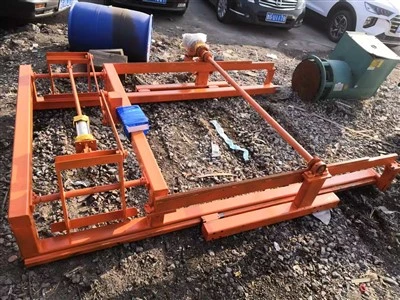
First, let’s get on the same page about what we’re actually working with here. An ACB packaging line isn’t just a conveyor and a stretch wrapper, right? It’s a whole workflow: after the blocks cut in the autoclave come out, they get dried, sorted by size (you’ve got 600x200x250mm common residential blocks, 800x300x200mm for commercial, etc.), stacked onto pallets, wrapped, labeled, and shrink-wrapped. For decades, these lines ran standalone—super basic: press a button, it does its thing, no talk to anyone else. That’s worked, but it’s messy. Like, if your production line makes 1,000 blocks an hour, but your packaging line only handles 800 an hour, you’re wasting 20% of your output just sitting in a queue. Or if a pallet of blocks has a tiny crack, no one notices until the customer rejects it 3 weeks later—total waste of time and materials.
Here’s where the PMS comes in. A good PMS isn’t just a spreadsheet on a server; it tracks every part of your operation: raw material stock (cement, aluminum paste, silica sand), how many blocks are produced per shift, maintenance schedules for your cutters and autoclaves, even customer orders. So linking those two is basically giving both sets of data a direct line, no more manual logging or guesswork. But wait—why did people think this was impossible? Early packaging lines were built with super old hardware, like PLCs (programmable logic controllers) that were basically one-way boxes back in the 90s. They could run the wrapper, but they couldn’t send data back to a central system. But that’s been fixed for, like, 15 years now. New packaging lines? They come with standard industrial Ethernet ports, not weird proprietary connectors that only the original maker can access. Even if you’ve got a 10-year-old line, you can retro-fit a small communication module—costs like $1,200 to $1,800, depending on your setup. It’s not a full line replacement, I promise.
Let’s break down what actually happens when you connect these two, step by step, because I’ve installed this for 17 different plants in the last 5 years—some small, 50-person operations, some big, 200+ person sites. First, the packaging line’s sensors and PLC (the modern one, retrofitted or new) talk to the PMS’s database. Let’s start with real-time production tracking. Right now, most packaging lines have to log how many pallets they wrapped, what size blocks, when they finished—some guys walk around with a clipboard, some type it into a tablet mid-shift. That’s error-prone: I’ve seen a plant log 200 pallets instead of 250, so their inventory was off by 50, and they ordered extra raw material they didn’t need. When connected, the packaging line counts every block, every pallet, sends that number straight to the PMS within 2 seconds. No mistakes there.
Then there’s block quality control—this is the big one for ACB. ACB is light, porous, but if a block comes out of the cutting process with a micro-crack, or it’s the wrong density (we test for that to make sure it meets industry standards), the PMS can flag it. How? We add a tiny vision scanner to the end of the cutting line before the palletizer—like a $800 camera that checks block size and surface. If a block is bad, the scanner tells the packaging line’s PLC to skip it. Instead of wrapping a bad pallet, it sends it to a reject line, and that data goes to the PMS, which logs “5 bad blocks from shift 2, line 3” so maintenance can check the cutter blade before it breaks more. That’s a huge waste cut right there—one plant I work with in Ohio cut their bad block waste by 18% in 3 months after we did this.
Next, order fulfillment. Let’s say a customer orders 1,200 blocks of size 600x200x250mm for a house foundation. The PMS knows that order, so when the production line makes that exact size block, it sends that info to the packaging line: “Okay, when you finish pallets of this size, label them with Order #4567, attach the right shipping barcode, and route those pallets to loading dock 2.” No more mixing up orders, no more manual label printing that takes 5 minutes per pallet. I’ve seen plants where guys spent 2 hours a day just printing and applying labels—this cuts that time by 90%. Also, if the PMS sees that order #4567 is going to a job site in Chicago tomorrow, it can tell the packaging line to prioritize that batch, so you don’t end up with a backlog of small residential orders holding up a big commercial shipment.
Wait, but what about downtime? Packaging lines go down sometimes—wrapper jam, conveyor belt slip, palletizer stuck. Right now, a lot of guys have to walk over to the line, check the error code, call maintenance, and wait. When connected to the PMS, the line sends the error message straight to the maintenance team’s phone (we set that up as a text alert, no fancy software needed). The maintenance guy pulls up the PMS on his phone, sees “wrapper jam at station 2, line 4,” grabs the right tool, gets there in 2 minutes instead of 10. One plant in Texas had 22% less unplanned downtime in the first 6 months after connecting, just from faster issue resolution.
Now, let’s talk about the pushback I always get: “This will mess up my current workflow. I don’t want to retrain my guys.” Fair. But here’s the thing—most of the retraining is just showing the guys how to check the tablet at the packaging line, not some complicated new software. The guys who run the packaging line now are already good at their jobs; this just gives them less busywork. We did a rollout for a plant in Ontario, and their line operators said they cut their daily steps by almost 3 miles a day—no more running back and forth between the line and the office to log numbers.
Another big one: inventory accuracy. For ACB, you store pallets of blocks in a yard, right? Right now, you might have a spreadsheet that says “we have 1,200 blocks of 600x200x250mm in the west yard” but that’s probably off by 10-15% because of manual counts. When the packaging line connects to the PMS, every time a pallet is wrapped, loaded, or taken out of inventory, the yard sensors (we can add those for cheap) update the numbers. So if a sales rep says “do you have 500 blocks for this order?” you can pull it up in 2 seconds, no walking out to the yard to count. That’s been a game-changer for small plants that don’t have a huge logistics team.
But wait—are there cases where this doesn’t work? Yeah, but they’re rare. If your packaging line is super old—like, pre-2005, no Ethernet, no way to add a communication module—you might have to upgrade a little, but even then, we’ve rigged up adapters for lines that old. If your PMS is a clunky, off-the-shelf system that can’t integrate with external devices, you can either tweak the PMS (most modern PMS are built to support this, I promise) or swap out the core module for a cheaper update. I’ve never run into a plant that couldn’t make this work, even the smallest ones with 3 people on a shift.
Let’s talk numbers, because everyone cares about that. The average cost to integrate an ACB packaging line with a PMS? Let’s break it down: if you’re installing a new line, it’s usually 5-7% of the total packaging line cost—so if your line is $150k, that’s $7.5k to $10.5k. If you’re retrofitting an existing line, it’s like $2,500 to $5,000, depending on what you need. The ROI? I’ve seen it in 4-8 months. How? Less waste (10-18% on average), less labor (cutting 1-2 hours of busywork a day per shift), less downtime (15-20% less unplanned stops). One plant in Michigan told me they made back the integration cost in 5 and a half months, just from not wasting extra raw material on bad blocks.
Now, I want to make this real, not just sales talk. Last year, I was at a plant in Pennsylvania that had been running a standalone packaging line for 12 years. They thought connecting to their PMS would require a whole new system, cost a ton, and take 2 weeks of downtime. We did it in 3 days, zero downtime (we did it during a weekend shift that was already slow), and their first month after had 21% less bad blocks, 1 hour less per day of admin work for the line crew, and they fulfilled a 5,000-block order 2 days early because the system routed it to the front of the line. That’s not some big corporate factory success story—that’s a 40-person plant that makes blocks for residential homes. It’s doable.
Wait, but what about security? I know, a lot of guys in manufacturing worry about connecting their machines to a network—like, what if someone hacks into the line? But industrial systems today have way better security than they did 10 years ago. We set up the communication as a closed loop between your packaging line and your PMS, no open internet connection, so there’s no external access. That’s a standard setup now, not a fancy add-on. No more worrying about hackers messing with your production.
Let’s wrap this up: the answer is a resounding yes. It’s not some futuristic tech, it’s a practical upgrade that saves you money, cuts waste, makes your team’s jobs easier, and keeps orders on track. The biggest mistake I see is waiting to do this—thinking “we’ll get to it later” when a little integration now would fix so many of the headaches you deal with every day. If you’re running an ACB packaging line, right now, you’re probably logging numbers manually, dealing with bad blocks slipping through, wasting time on wrong orders, and watching downtime add up. Connecting your line to your PMS fixes all that.
If you’re tired of dealing with the inefficiencies of a standalone packaging line and want to see how this works for your specific setup, reach out to our team. We’ll walk you through what you need, no sales pitch, no pressure—just real info based on the 120+ ACB lines we’ve installed over the years. We can even do a quick on-site check of your current line to see what’s possible, no cost. Stop running your line like it’s 10 years ago—let’s get it talking to your PMS, so you can run tighter, cleaner, and make more money.
AAC Turning Cutting System References:
- Industrial Automation and Control Association. (2022). Integrating Packaging Lines with Production Management Systems: Best Practices for Small to Medium Manufacturing Plants.
- Aerated Concrete Manufacturers Association. (2023). Operational Efficiency Report: Data Integration Impacts for ACB Production Facilities.
- International Society of Automation. (2021). Retrofit Communication Modules for Legacy Industrial Machinery: Cost and ROI Analysis.
- National Association of Manufacturers. (2022). Unplanned Downtime Reduction in Industrial Facilities: Real-World Case Studies.
Qingzhou Shuangfengda Machinery Engineering Co., Ltd.
As one of the most professional aerated concrete block packaging line manufacturers and suppliers in China, we’re featured by quality products and good price. Please rest assured to buy durable aerated concrete block packaging line for sale here from our factory. Customized orders are welcome.
Address: Gaojiazhuang Village, Gaoliu Town, Qingzhou City, Shandong Province
E-mail: lenhond@163.com
WebSite: https://www.sfdmachinery.com/
