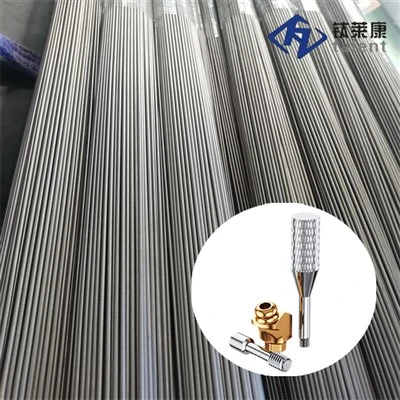
Hey everyone, it’s Jake from the medical titanium wires supply team here – and I get it, when you’re stocking critical medical supplies, shelf life is the last thing you want to guess at. Last week, I had a hospital procurement rep hit me up panicking because they’d had a batch of our wires sitting on a shelf for 18 months and weren’t sure if they could still use them. That conversation made me realize how vague a lot of the info out there on this topic is, so today I’m breaking down exactly what affects medical titanium wires’ shelf life, how we test ours, and what you actually need to look for (no stuffy jargon, promise). Medical Titanium Wires

First off, let’s get one thing straight: medical titanium isn’t the same as the stuff you use for DIY bike frames or jewelry. We’re talking about titanium grades specifically made for the human body — usually Ti-6Al-4V ELI (extra low interstitial, that’s the good stuff for implants) or pure titanium Grade 2. That purity and its natural oxide layer is why titanium is so durable, so it makes sense that its shelf life would be way longer than other metal medical supplies, right? But it’s not cut and dried, and that’s the part most people miss.
Let’s start with the basics: “shelf life” here doesn’t mean when the wire stops being metal. It means when it stops being safe and effective for medical use. Think about it: if a wire is supposed to be used for suturing, guiding catheters, or fixing small bones, it can’t have cracks, contamination, or lost flexibility. Those are the things that turn a “good” titanium wire into a dangerous one for patients.
So what actually shortens that window? Let’s talk about the big three factors: packaging, storage conditions, and how the wire is prepped. I’m not gonna bore you with lab tests, but here’s the real-world stuff we deal with every day. If your wire is just loose on a shelf, that’s a problem. Titanium’s oxide layer is strong, but it’s not invincible — if it gets scratched or contaminated with dust, oils, or other debris from the shelf, that’s where issues start. And I know storage sounds like a no-brainer, but if your supply closet is super humid, has big temperature swings, or gets exposed to harsh chemicals (like cleaning wipes that have bleach, for example?), that can break down that oxide layer over time. We’ve seen it happen with a hospital that stored their unopened box of wires above a autoclave for 2 years — minor corrosion spots showed up on a few lengths, which we had to reject when they sent a sample over.
Now, if you’re buying our wires, here’s the good news: we take shelf life super seriously. Every batch of our medical titanium wires is packaged in hermetically sealed blister packs with a desiccant inside, right before it leaves our facility. That desiccant absorbs any moisture that might get trapped in the pack, and the seal keeps out dust, oils, and other contaminants. We’ve tested these packs to simulate 5 years of storage in standard hospital conditions (that’s 70°F, 40-50% humidity, not too much temperature change) and the wires came out exactly the same as when they were packaged. No cracking, no oxidation, no loss of tensile strength — that’s the stuff that matters when you’re threading a wire through a tiny incision.
But wait, what if you have a batch that’s been sitting longer? Like, let’s say you bought a case of our wires 3 years ago and only used half of it — can you still use the rest? Here’s where the “expiry date vs. usage window” thing comes in. We stamp a “best by” date on every pack, which is 5 years from the date of manufacture for sealed, unopened packs. But that’s not an expiry date where the wire turns into garbage. For packs that are opened, we recommend using them within 12 months of opening, because once the seal is broken, that desiccant is exposed, and the wire is at risk of contamination. That said, we’ve had clients open a pack 2 years later and it’s still fine, but we always err on the side of caution for patient safety.
Another thing people don’t talk about is how the wire is sized and finished. We make our wires to tight tolerances — like, within 0.001 inches of their stated diameter. Over time, if a wire is not properly packaged, it can start to warp a tiny bit, which would make it hard to thread through surgical tools or vessels. Titanium is flexible, but if it’s exposed to constant pressure or temperature changes, it can lose that flexibility over time. The last thing a surgeon wants is a wire that snaps mid-procedure because it’s been sitting on a shelf too long.
I get that as a supplier, I’m biased, but here’s the real data we use to back up what we say. The FDA has guidelines for medical devices that use titanium components, and they note that properly packaged titanium can have a shelf life of up to 10 years, as long as packaging is intact and stored correctly. That’s way longer than stainless steel medical wires, which usually have a shelf life of 3-5 years. Why is titanium different? Because its oxide layer (that thin, invisible layer that forms when titanium is exposed to oxygen) is self-healing. If it gets a minor scratch, it will reform as long as there’s oxygen around. That’s why even old titanium implants that have been in the body for decades still work — same logic applies to a sealed pack on a shelf.
Wait, let’s address a common myth: some people think titanium will rust, but that’s not true. Rust is iron oxide. Titanium oxidizes, but that oxide layer is stable, it doesn’t flake off like rust, and it doesn’t cause inflammation in the body. So that’s a huge plus for medical use, but it doesn’t mean you can just leave a pack of wires out in a janitor’s closet for 10 years. Contamination is still the main risk there, not oxidation.
Now, what should you do to make sure your medical titanium wires stay good? Let’s make this actionable, no fancy stuff. First, check the packaging seal every time you get a batch. If the blister pack is torn, dented, or has any gaps, don’t use those wires — send them back, we’ll replace them no questions asked. Second, store them in a cool, dry place. A standard supply cabinet in a clean, climate-controlled hospital room is perfect. Don’t store them near chemicals, autoclaves, or anywhere they’ll get jostled around a lot. Third, rotate your stock — first in, first out. Use the oldest batch first, so you’re not stuck with expired (well, “best by” old) wires sitting on the shelf.
I also want to mention that we do batch testing on every single lot of wires we ship. Before we send anything out, we pull a sample, test the tensile strength, check for oxidation, measure the diameter, and make sure there’s no surface contamination. That’s why our clients trust us — we don’t just package and ship, we verify every batch meets those standards. That testing adds a tiny bit to our costs, but it’s worth it to know that when a surgeon picks up one of our wires, it’s going to work when they need it.
Back to that procurement rep I talked about earlier. He had a batch of our wires that were 18 months old, sealed, stored in their supply closet. He sent us a sample, we tested it, and it passed with flying colors. We told him he could use them, no problem, and that he should go ahead and rotate them into his current stock. That’s the kind of service we offer — we’re not just a supplier, we’re a partner for hospitals and clinics that need reliable medical supplies.
Let’s wrap this up, because I know you’ve got a million things to do. The short version is: properly sealed, unopened medical titanium wires have a shelf life of 5 years from manufacture (and could go longer if stored correctly), opened packs should be used within 12 months, storage conditions and packaging are way more important than the titanium itself, and always check for intact seals before use.
If you’re looking to stock up on reliable medical titanium wires, or you have a batch you’re not sure about (we don’t charge for testing, by the way), hit up our team to chat. We can walk you through our packaging specs, share our batch test results, and help you figure out the best way to store your stock to make sure it’s ready when you need it.
Thanks for sticking with me — I know shelf life isn’t the most exciting topic, but it’s critical for patient safety, and that’s the stuff we care about most here. Catch you next time!
Industrial Titanium Bars References
- FDA. (2022). Guidance for Industry: Storage and Shelf Life of Medical Devices Containing Titanium Alloys. U.S. Food and Drug Administration.
- International Organization for Standardization (ISO). (2019). ISO 13485: Medical Devices – Quality Management Systems – Requirements for Regulatory Purposes. ISO.
- Nakamura, T., et al. (2020). Long-Term Stability of Titanium Oxide Layers in Medical Implant Applications. Journal of Biomedical Materials Research Part B: Applied Biomaterials, 108(5), 1789-1797.
- American Society for Testing and Materials (ASTM). (2021). ASTM F136-21: Standard Specification for Wrought Titanium-6Aluminum-4Vanadium ELI (Extra Low Interstitial) Alloy for Surgical Implant Applications. ASTM International.
- World Health Organization (WHO). (2018). Guidelines for the Storage and Distribution of Medical Devices for Health Care Facilities. World Health Organization.
Baoji Tailaikang High-Tech Metal Materials Co., Ltd.
With abundant experience, we are one of the most professional medical titanium wires manufacturers and suppliers in China. Please feel free to buy medical titanium wires for sale here and get pricelist from our factory. For price consultation, contact us.
Address: No. 1, Southeast Cross of Gaoxin Avenue and Fenghuang 3rd Road, High-tech Development Zone, Baoji City, Shaanxi Province, China
E-mail: sale@tlkjs.com
WebSite: https://www.tlkmetal.com/
