Hey there, if you’ve ever stared at a pile of anchor bolts and washers scratching your head—“Wait, does this tiny round ring actually matter?”—you’re not alone. As someone who’s been selling anchor bolts for over a decade, I’ve lost count of how many times contractors, engineers, and even DIYers have walked into our shop (or slid into our DMs) like, “Can I just grab any washer that fits the bolt?” Let me save you the headache: that’s a super common mistake. Choosing the wrong washer for your anchor bolt can turn a solid installation into a disaster waiting to happen—think loose railings, shifting concrete forms, or even structural issues down the line. Today, I’m breaking this down like I would for my regulars at the shop—no fancy jargon, just real, actionable stuff that actually works. Anchor Bolts
First off, let’s get on the same page: what even is an anchor bolt washer, and why does it matter so much? I see folks writing it off as a “placeholder” or a “band-aid,” but nah—its whole job is to distribute the load from the bolt’s nut across a bigger area of the material you’re anchoring into (usually concrete, masonry, or sometimes wood). If you skip or mess up the washer, all that pressure from tightening the nut gets concentrated on a tiny spot—like pushing a thumbtack into drywall with all your weight vs. using a flat hand. The thumbtack goes right through, right? Same exact thing here. For structural applications, that difference isn’t just a “minor inconvenience”—it’s a safety thing. I’ve seen a job last year where a contractor used a standard flat washer for a heavy-duty anchor bolt on a loading dock. Tightened the nut too hard, crushed the concrete under it, and the whole section had to be ripped out and redone. Cost them thousands, and it all came down to picking the wrong washer.
Okay, so now that we’re past the “why,” let’s talk about how to actually pick the right one. The first, most non-negotiable rule: it has to fit your anchor bolt. Wait, I know that sounds obvious, but I can’t tell you how many times someone shows up with a ½-inch bolt and a washer labeled “½” only to find the hole’s way too small. Anchors have specific shank diameters, right? A ½-inch anchor bolt’s shank isn’t the same as a standard machine bolt—its washer has to have a hole that accommodates that thicker shank. Always check the anchor’s spec sheet, or if you’re ordering from us, just ask—we’ll hook you up with the right fit. Pro tip: don’t guess. Measure the shank of your bolt with a digital caliper if you have one, or hold the bolt up to the washer’s hole before buying. If it wiggles, skip it. A loose fit means the washer won’t do its job, period.
Next up, material. This is another big one that most people sleep on. Washers come in all kinds of materials, and picking the wrong one can lead to rust, corrosion, or even galvanic corrosion if you mix metals. Let’s break down the most common types I deal with daily. First, carbon steel washers—super cheap, super common, great for indoor or temporary applications where rust isn’t a huge deal. But if you’re using them outdoors, or in a damp space (like a basement, pool deck, or anywhere near salt water), carbon steel will rust like crazy. Once that rust builds up, it expands, which can crack the concrete around your anchor, and also makes tightening the nut a nightmare—rusted washers seize up, and you end up damaging the bolt or the material.
Then there’s stainless steel washers. These are my go-to for most outdoor or long-lasting jobs. They come in 304 and 316 grades, which you’ve probably heard of. 304 is the standard—great for general outdoor use, rain, regular humidity, most residential jobs. 316 is the heavy hitter—perfect for saltwater environments, coastal areas, or industrial settings where there’s harsh chemicals (like factory floors or treatment plants). I once had a customer on the Gulf Coast who tried to use 304 washers for a dock installation; six months later, they were corroded from the salt spray, and they had to replace all 200 anchors. Switched to 316, no issues since. Another material: zinc-plated steel. Wait, that’s different from plain carbon steel—zinc plating gives it a thin layer of rust resistance, but it’s not as durable as stainless, and it can chip or wear off over time. Don’t use zinc-plated washers for high-load or long-term outdoor stuff; save them for small, low-stakes jobs like hanging a shelf indoors.
Oh, and galvanic corrosion—this is the hidden enemy. If you’re using a galvanized anchor bolt, don’t pair it with a plain carbon steel washer. The two different metals will react when exposed to moisture, and you’ll get that funky corrosion that eats away at both parts. If your anchor is galvanized, grab a galvanized washer or a stainless steel one to match. Simple rule: same or compatible metals to avoid that mess.
Now, size and thickness. Not just the inner diameter (the hole) we talked about earlier, but the outer diameter and the thickness. Let’s start with outer diameter: remember that whole “distribute load” thing? The bigger the outer diameter (within reason), the more area the load is spread over. For example, a standard ½-inch anchor bolt washer has an outer diameter of about 1.06 inches, but if you use a “heavy hex” washer for that same bolt, it’s like 1.68 inches—way more area, which is perfect for heavy loads. When do you need a bigger outer diameter? If you’re anchoring into thin concrete, or if the load on the anchor is really high (like for a guardrail, a deck post, or a swing set). Those are the jobs where a standard washer might not cover enough space, so the concrete can crack under pressure. My go-to for deck anchors is heavy hex washers every time; I’ve had so many customers come back saying they used those and never had issues with shifting.
Thickness is another part people skip. Most standard washers are about 1/8-inch thick, but there are thinner ones (for tight spaces) and thicker ones (for high-torque applications). If you’re tightening a nut with a impact wrench (super common for big jobs), a thin washer might bend or warp under the pressure. That messes up the load distribution, and you might not even realize it until later. Always check the torque specs for your anchor bolt—if the torque is high (over 50 ft-lbs), go with a thicker washer, usually 3/16-inch or even ¼-inch. It’s a tiny extra cost, but it saves you from bending washers or damaging your tools or the installation.
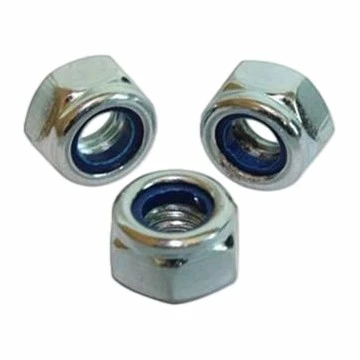
Wait, are there different types of washers? Oh yeah, I’ve got a whole bin of them at the shop—let’s go over the main ones you’ll encounter. First, flat washers: the most common, simple, flat ring. Good for general use, but not always ideal for high loads. Then there’s fender washers—super wide, thin, perfect for when you need to spread load but don’t have a lot of space. I use fender washers all the time for masonry, because the concrete is often softer, so you want a wider area without extra thickness. Heavy hex washers I mentioned earlier—thicker, wider, made for high-torque, high-load structural jobs. These are the ones you see on big construction sites for steel beams, foundation anchors, that stuff. Then there’s lock washers—wait, hold on, lock washers aren’t for distributing load! Their whole job is to keep the nut from vibrating loose. A lot of guys pair a lock washer with a flat washer, and that works for some jobs, but never use a lock washer alone for structural stuff. It doesn’t spread the load, so you’re back to that tiny concentrated pressure problem. If you need locking, use both, or use a flat washer with a nut that has a nylon insert (those are great for vibration). I usually tell people: flat washer first, then lock washer, then nut if you need vibration resistance. But again, prioritize load distribution with the flat washer first.
Let’s test this with real examples, because that’s what makes it click. Let’s say you’re building a backyard deck—super common. Your anchor bolts are ½-inch, galvanized, for concrete. What do you need? A ½-inch heavy hex washer (thick, wide, good for deck loads) made of galvanized steel (matches your anchor, no corrosion), same metal to avoid reactions. If you used a standard carbon steel flat washer instead, even if it fits, you’re at higher risk of the concrete cracking over time, especially in freeze-thaw climates (which most of us have here). Now another example: installing a handrail on an outdoor porch. Anchor bolts are 3/8-inch, stainless steel. Go with a standard flat or fender washer (3/8-inch, stainless 304), outer diameter big enough to cover the edge of the porch post’s base. No need for heavy hex here, since the load is lower than a deck, but still get the right material. Temporary job, like setting up a temporary concrete form? Carbon steel flat washer works, since it’s not permanent, no rust worries for a few weeks.
Wait, what about mistakes to avoid? I mentioned a few, but let’s list the big ones so you don’t make them. First, guessing the fit—always double-check the anchor’s spec, or bring the bolt to the shop to test the washer’s hole. I can’t tell you how many people show up with a washer and a bolt they grabbed off a shelf, and it’s not matching. Second, mixing metals: like galvanized anchor with plain steel washer, or stainless bolt with aluminum washer. That’s a recipe for corrosion. Third, using a washer that’s too thin for high torque: if you’re cranking down with an impact, thin washers bend, and that messes up the installation. Fourth, skipping the washer entirely. I’ve seen a guy on a DIY project skip a washer to save a dollar, and six months later, his fence post was leaning because the concrete under the bolt was crushed. Worth saving a dollar? Not even close.
Another thing to consider: environmental conditions. This ties back to material, but it’s worth repeating. If your installation is in a climate with freeze-thaw cycles (like most of North America), concrete expands and contracts. A washer that’s too small or the wrong material can’t handle that movement, leading to cracks around the anchor. For cold weather projects, make sure your washer is at least the standard thickness, and stainless if it’s going to be exposed. For coastal areas, 316 stainless is non-negotiable—salt air will eat through 304, no question. For industrial areas with chemicals (like warehouses with cleaning solutions, or factories with solvents), again, go with a corrosion-resistant material, usually stainless steel.
Wait, what if you’re working with wood? Anchor bolts into wood are less common, but they do happen (like for structural posts in a cabin, or a pergola). For wood, you actually want a slightly different washer—sometimes a fender washer is great, because it spreads the load over the wood, which is softer than concrete. Also, make sure the washer isn’t so thick that it creates a gap between the nut and the wood; that gap can let water in, leading to rot. I usually recommend a thin stainless steel fender washer for wood anchors, sized to fit the bolt, with an outer diameter that covers at least half the width of the post’s base. That way, the load is spread evenly, no rot, no shifting.
Okay, so let’s wrap this up with a quick checklist you can save for your next project. 1. Measure your anchor bolt’s shank diameter—get a washer with a matching inner hole (hold them up together to check, no guessing). 2. Pick the material: carbon steel for indoor/temporary, zinc-plated for low-load indoor, 304 stainless for general outdoor/residential, 316 stainless for coastal/harsh chemicals. 3. Check the outer diameter: bigger = more load distribution—use heavy hex for high loads, fender washers for thin material or wood, standard flat for low-load indoor. 4. Check thickness: thicker for high torque (>50 ft-lbs), standard (1/8-inch) for most jobs, thin only if you have limited space. 5. Match metals to avoid corrosion—same or compatible (galvanized with galvanized/stainless, stainless with stainless). 6. Prioritize flat washers for load distribution; use lock washers or nylon insert nuts if you need vibration resistance, but don’t skip the flat washer.
At the end of the day, this stuff doesn’t have to be complicated. I’ve been in this business long enough to know that the smallest parts make the biggest difference. A good washer is like the unsung hero of anchor bolt installations—no one notices it when it’s done right, but everyone notices when it’s wrong. If you’re still unsure what you need, don’t guess. Hit us up for a chat—we’ve got all the grades, sizes, and types of washers, and we’ll help you pick exactly what fits your project, no pressure, no confusing jargon. Whether you’re a contractor with a big deck job or a DIYer hanging a swing set, we’re here to make this easy for you.
Structural Nuts References
- Anchor Bolt Design and Installation, American Concrete Institute (ACI 318-19)
- Corrosion Control for Fasteners, Stainless Steel Manufacturer’s Association
- Structural Washers Selection Guide, Fastener Engineering Magazine, 2022
- Load Distribution in Anchor Systems, National Association of Home Builders (NAHB) Research Center
Handan Jihao Fastener Co., Ltd.
We’re known as one of the most professional anchor bolts manufacturers and suppliers in China. With abundant experience, we warmly welcome you to wholesale customized anchor bolts made in China here from our factory. If you have any enquiry about cooperation, please feel free to email us.
Address: A2, Row 31, Feiyu Screw World, Hebei Pu, Linmengguan Town, Yongnian District, Handan City, Hebei Province
E-mail: wenzhaona0@gmail.com
WebSite: https://www.chinaboltnut.com/
